Dear Reader,
The most underappreciated bombshell in tech history has been dropped.
And it changes the game for the entire world.
Pay attention, because this isn’t just about the biggest IPO, nor is it about building the biggest company the world has ever seen.
It’s about survival.
The Biggest Merger in History
Earlier this month, SpaceX acquired xAI in an all-stock deal that valued the combined entities at a staggering US$1.25 trillion.
It’s being hailed as the largest corporate merger in history.
Word is that SpaceX may seek an IPO worth $1.75 trillion, making it by far the largest IPO…EVER.
Headlines called it a “unification of AI and space ambitions.”
Others are calling it the “buy Elon Musk” IPO.
And while they’re right…they’re only scratching the surface.
This isn’t just another Elon Musk consolidation play.
It’s the final piece of a decade-long master plan that ties together Tesla, SpaceX, xAI, Optimus, The Boring Company, Starlink, and even Elon’s solar investments into one singular objective: creating the world’s largest, most powerful, and most resilient AI infrastructure — floating in orbit, powered by the Sun itself.
In our last letter, we talked about how the elites have been playing a game – a simulation – with humanity.
And everything Elon has done over the past decade has been a master plan to prevent them from winning.
Today, I am going to reveal exactly how every move Elon has made over the past 15 years was engineered for this moment.
Once you read this in its entirety, you’ll begin to see why countries around the world are hoarding their raw materials.
The Limits of Earth
Right now, the AI race is hitting a brick wall that has nothing to do with algorithms and everything to do with physics and energy supply.
As Elon recently explained, “All of the United States currently uses half a terawatt on average. So if you say a terawatt [of data centers], that would be twice as much electricity as the United States currently consumes.”
Let that number sink in for a moment.
America’s entire economy — every home, factory, EV, office tower, and city from coast to coast — runs on roughly half a terawatt.
A single terawatt for AI data centers alone would double the world’s largest economy’s power consumption.
While the headlines obsess over chips, models, and training runs, Elon is focused on the hard physical limit that will decide how far and how fast AI can actually go: raw power. Electricity, to be precise.
Not long ago, we had a chip shortage. Today, chip production is exploding, and we’re shipping GPUs at a pace that would have seemed impossible just a few years ago.
While the media focuses on chip production, it isn’t slowing down.
The problem is that you have to turn these chips on, and to do that, you need A LOT of energy.
And since EVERY nation knows that whoever wins the AI race will ultimately become the world power, EVERY nation will divert energy to these AI datacentres – even if it increases costs for its citizens.
Unfortunately, creating new energy is not easy.
Sure, there’s money being poured into modular nuclear reactors, but they won’t produce nearly enough energy. Meanwhile, new power plants and high-voltage transmission lines take years to permit and build. Power plants are already sold out through 2030, and turbine blades and vanes are backlogged for years. Add in local opposition, environmental rules, and grid congestion, and we’ll have more chips than can be turned on.
In other words, demand for energy will significantly outpace supply.
This isn’t just another dotcom boom. It shifts the entire conversation from Silicon Valley hype to national energy infrastructure.
We are in the early stage of a new industrial revolution – one that will need to be powered by staggering, almost unimaginable amounts of electricity.
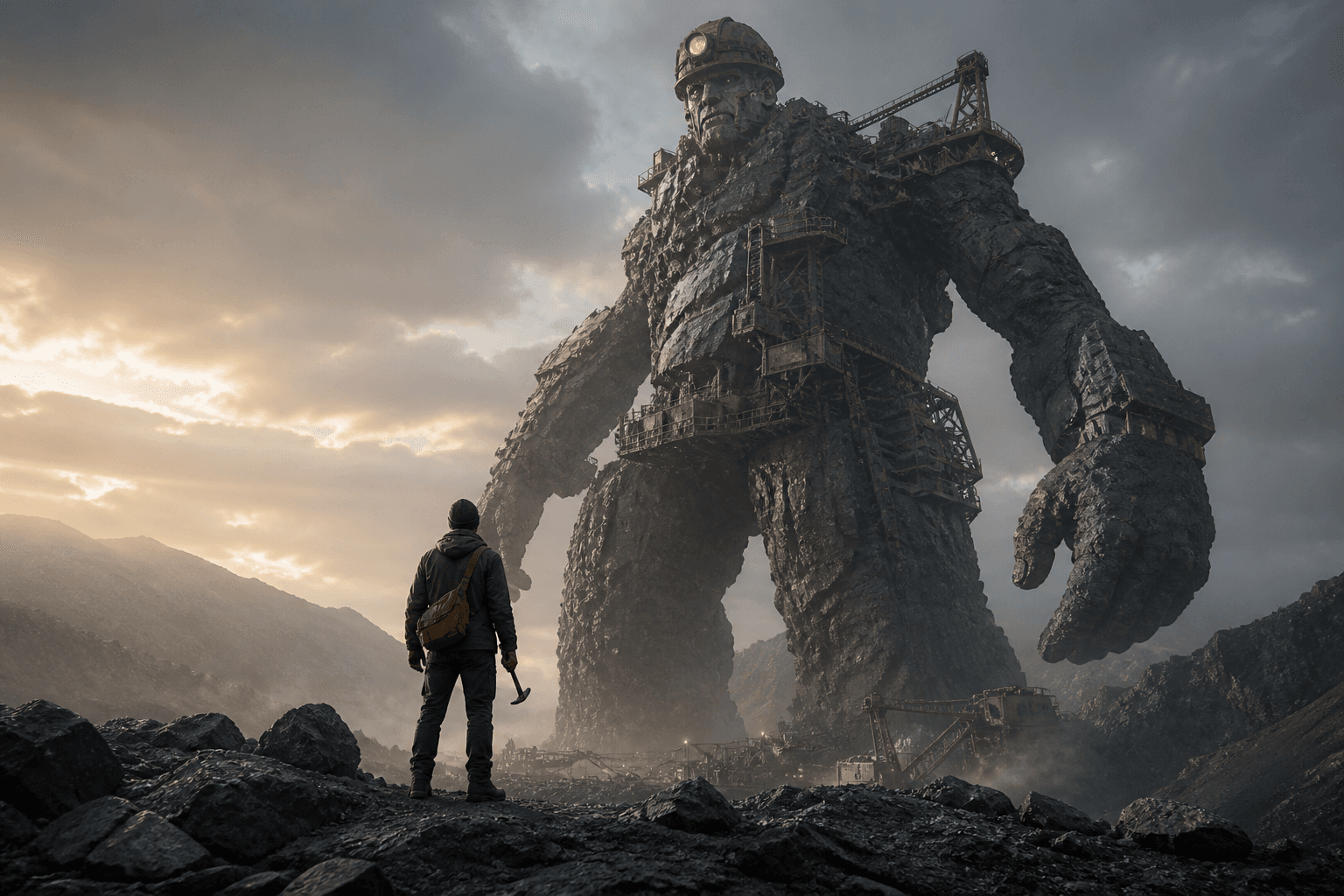
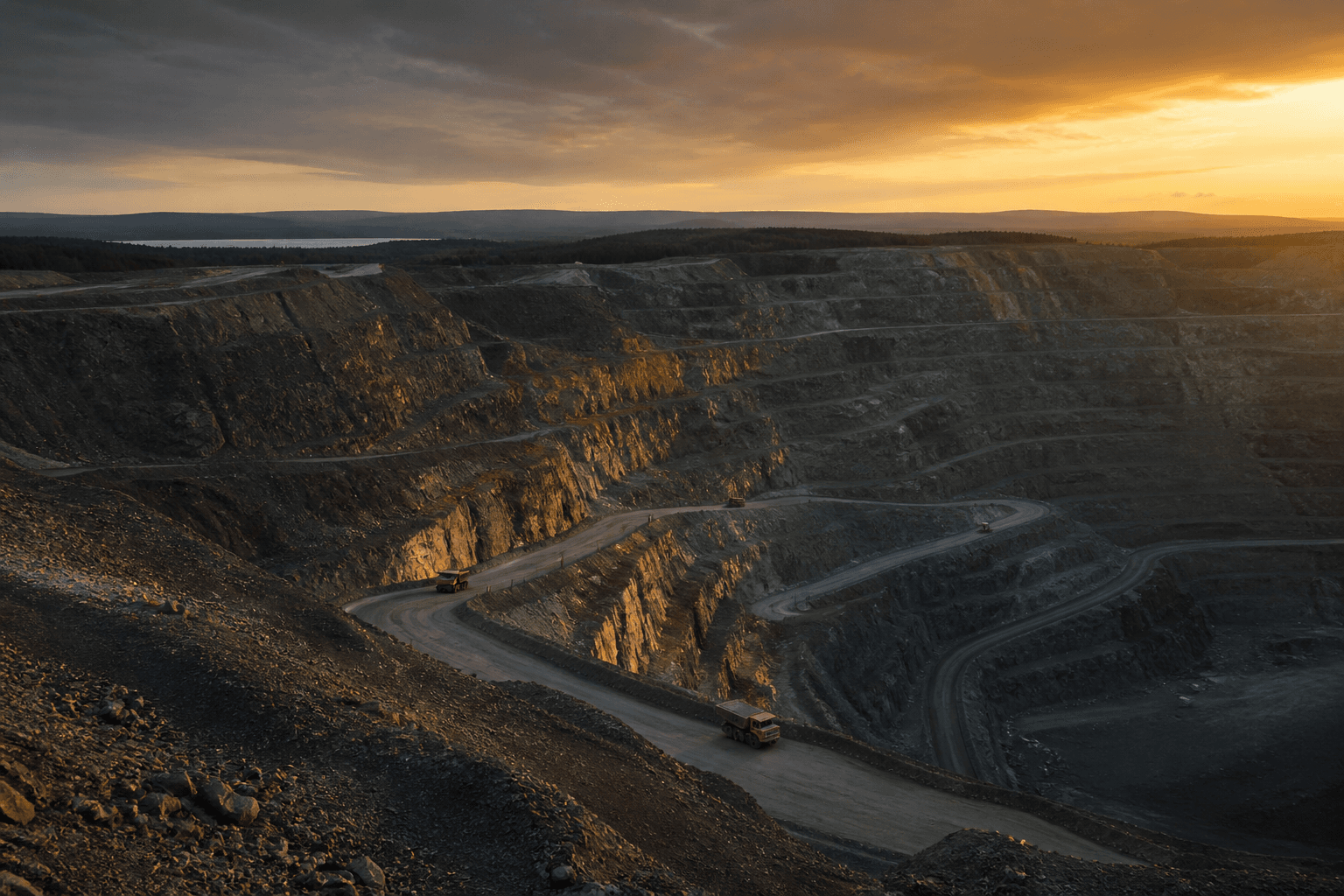
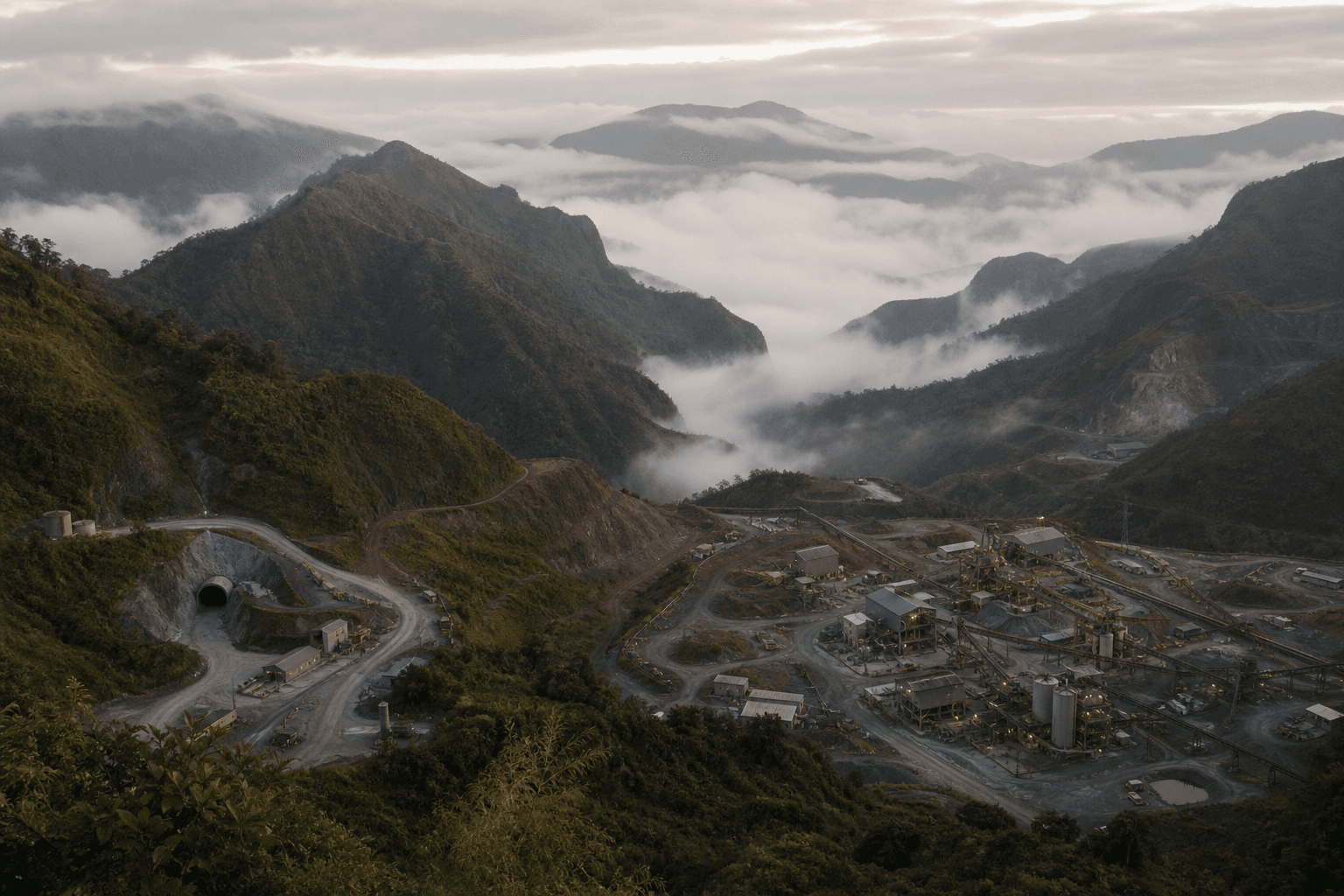
And that reality will create opportunities on a scale most investors haven’t fully grasped. This is exactly why we remain invested in the minerals and resources sector: EVERY nation will be fighting for raw resources in the AI battle.
But that also means AI is about to run out of juice.
On Earth, that is…
Enter SpaceX
There is one massive advantage that space has over Earth: the Sun.
Despite the advancements in solar panels, they have one major flaw: they don’t work when the sun isn’t shining.
That’s where “capacity factor” comes in. Think of it as the panel’s real-world “uptime percentage.”
You see, a typical solar farm on Earth operates at full capacity only about 25% of the time. Sunny summer afternoons deliver peak output, but at night? Nothing. Cloudy days? Much less. Winter? Less still. Over the course of a year, that means you get only about a quarter of the panels’ rated capacity on average.
Here’s what that means in plain numbers.
If you want one terawatt of reliable, always-on electricity from solar (the amount Elon says AI data centers alone could need soon), you can’t just build one terawatt worth of panels. Because they only deliver 25% of their rated power on average, you actually need to install four times as much — roughly 4 terawatts of solar panels.
That’s four times the hardware. Four times the land. Four times the raw materials (silicon, glass, aluminum, copper). Four times the upfront cost.
But there’s more.
Even with 4 TW of panels, you still only get power during daylight hours. And since AI data centers don’t sleep, you’ll need massive battery banks to store the extra power made during peak sun hours and release it at night or on cloudy days.
We’re talking battery farms measured in hundreds of gigawatt-hours, or thousands of the biggest Tesla Megapacks stacked together, covering hundreds of square miles.
And all of this just to deliver one clean, reliable terawatt.
Now imagine doing this at the scale required for AI — possibly multiple terawatts in the coming years.
It suddenly becomes obvious why Elon (and others) are saying solar and batteries alone can’t realistically carry the whole load at the terawatt scale. The land use, mineral demands, grid upgrades, and sheer engineering challenges are staggering, let alone the cost.
But in space?
In space, there’s no atmosphere. That means solar panels operate at significantly higher efficiencies – up to 30% higher. There’s also no day-night cycle, no clouds, and no weather. Add those up, and a solar panel produces five times more power in space than on Earth.
And because the sun is always shining, you won’t even need batteries.
That makes the entire system up to 10 times cheaper in space than on Earth.
To Elon’s point, the Sun represents nearly all of the energy in the entire solar system. Even if you conjured up four entire Jupiters out of thin air and burned every last atom of them – converting their full mass directly into pure energy – the Sun would still round up to 100% of all the power that will ever be produced in the entire solar system.
That’s why Tesla bought SolarCity years ago — not just for Earth roofs, but because Elon always knew solar panels in space would power the future of intelligence.
So, when Elon was laughed at for Tesla buying SolarCity, now you know why he did it.
With this plan in place, he now has to find a way to get everything up there while maintaining full control of the process and supply chain.

10,000 Starship Launches a Year
To put 100 gigawatts of AI into orbit in a single year requires roughly 10,000 SpaceX Starship launches.
That sounds insane, but on paper, it’s actually quite doable.
With rapid reuse, you could do it with just 20-30 Starships – launching one every hour from Starbase.
SpaceX is already gearing up for 10,000–30,000 launches per year, with the intention of sending orbital data centers on Starship’s back.
Now, you might think, this will require A LOT of energy.
And it will, but it’s far more manageable than the headline number suggests once you run the actual math.
Each full Starship stack (Super Heavy booster + Starship upper stage) loads up with roughly 4,900 metric tons of propellant at liftoff.
Of that total, about 22% is the actual “gas,” liquid methane (CH4). The rest is liquid oxygen (LOX), which is simply distilled from regular air.
That works out to approximately 1,030 metric tons of liquid methane per launch.
In short, you’re looking at roughly 10.3 million metric tons of liquid methane annually.
In everyday energy terms, that’s equivalent to about 500–520 billion cubic feet (Bcf) of natural gas per year.
It sounds like a lot, but the United States currently consumes around 34,000 Bcf of natural gas every year.
10,000 Starship launches would therefore require only about 1.5% of America’s total annual natural gas demand.
That’s a big number in absolute terms, but in the context of U.S. energy markets, it’s very much within reach – especially since Texas sits on some of the richest natural gas fields on the planet, right next door to Starbase.
SpaceX has already signalled it will build its own liquefaction plants and secure dedicated long-term supply contracts.
The question isn’t how Elon is going to do it, it’s how he is going to pay for it.
And Elon is the king of breaking bottlenecks.
The Largest Real-World AI Training Dataset on Earth
Before we get to how he is going to pay for everything, we have to first understand that none of this grand vision works without intelligence that genuinely understands the messy, unpredictable physical world.
And that’s where Tesla has quietly built what may be the single greatest competitive moat in all of AI.
While other labs scrape the internet or train in sanitized simulators, Tesla has been doing something far more powerful: deploying a planetary-scale sensor network that logs the real world in real time.
And it’s been doing it for years.
Tesla’s growing fleet is on track to reach 10 million vehicles. And while analysts talk negatively of Tesla and its car sales, they’re missing Tesla’s key element: the largest distributed AI training system ever created.
Each Tesla is equipped with multiple high-resolution cameras and sensors that capture a staggering 1.5 gigabytes of video data every single second while the vehicle is active. That’s 36 frames per second of rich visual information, processed and compressed down to just two kilobytes per second of control outputs.
But here’s what most people miss: the data collection doesn’t stop when the car is parked.
Whether it’s sitting in your driveway, outside an office building, or in a shopping mall parking lot, Tesla’s cameras continue to roll. They’re quietly observing and logging everyday human life: how people walk, gesture, and interact; how children play and run; how delivery drivers handle packages; how construction workers use tools; how objects move, deform, and collide in uncontrolled environments.
This isn’t just driving data. This is a comprehensive, high-fidelity model of how the physical world actually works. Every subtle human behavior, every unpredictable real-world physics interaction is being captured at scale – billions of hours of ground-truth reality that no simulation or internet scrape can ever match.
This is called “spatial intelligence.”
As Standford’s inaugural Sequoia Professor in the Computer Science Department, Dr. Li says, “As a moving agent, just like humans and animals, we use spatial intelligence to move around the world and interact with the world. When this technology is ready, the robotic revolution is going to start.”
Tesla’s massive, proprietary dataset is precisely why Tesla’s Full Self-Driving system has crossed the threshold where it increasingly feels sentient and reliable. More importantly, it is the foundational training data that will make Optimus the most capable humanoid robot ever built.
The vision-based AI architecture developed for the car transfers almost directly to Optimus.
Same neural nets. Same Tesla AI chips. Same reality generator that relentlessly closes the simulation-to-reality gap.
So, while competitors are still struggling with basic grasping in controlled settings, Optimus will benefit from having seen how humans actually manipulate objects in thousands of real environments, under every lighting condition and weather scenario imaginable.
This data advantage is enormous.
It gives xAI and Optimus a head start that competitors simply cannot replicate overnight.
And while we all think of what Optimus can do on Earth, from surgery to getting groceries, Elon is thinking of what Optimus can do in space.
In fact, Optimus is perfectly positioned to perform the dangerous, precise work required for lunar and orbital infrastructure tasks that would be extremely risky or impossible for humans in spacesuits.
Don’t be surprised if we soon witness even tighter integration between Tesla and SpaceX.
The synergies are overwhelming.
Tesla provides the real-world data and robot hardware, xAI supplies the truth-seeking intelligence layer, and SpaceX delivers the launch and orbital infrastructure.
Together, they form a closed-loop system capable of building and operating AI at scales never before imagined.
But that’s just the tip of the earth-berg.
Beyond Earth: Moonbase Alpha
Elon has already stated the goal of the Xai and SpaceX merger: to build a constellation of up to one million orbital AI data center satellites.
But even with 10,000 launches per year, Starships alone won’t come close to that.
That’s because launching from Earth caps out at roughly one terawatt per year due to rocket fuel supply limits.
So, what’s the solution?
You go to the Moon.
Elon has already told xAI staff he wants to build the first AI satellite factory on the Moon: “Moonbase Alpha.”
From there, a giant electromagnetic mass driver (essentially a lunar catapult) will fling satellites straight into orbit at almost zero fuel cost.
Picture an electromagnetic railgun stretching kilometres across the lunar surface, firing solar-powered AI satellites one after another at 2.5 kilometres per second straight into deep space.
It requires no propellant, no chemical rockets – just electricity from lunar solar arrays launching finished satellites built on the Moon itself.

Why the Moon?
Because the moon has only about 1/6th of Earth’s gravity and no atmosphere to fight, launching requires much less energy. This makes a mass driver the perfect launch platform for more AI satellites.
But that’s not all.
The lunar soil is roughly 20% silicon. That means you can mine it, refine it, and manufacture solar cells and radiators on-site using aluminum from the regolith, a blanket of unconsolidated, loose, heterogeneous superficial deposits covering the Moon.
With a lunar mass driver, Elon believes we could scale to “a petawatt per year” — a thousand terawatts — without ever worrying about Earth’s fuel bottlenecks.
It is the ultimate pipeline: continuous, low-cost launches of intelligence into the cosmos.
Optimus robots, powered by Tesla’s unmatched real-world data, will operate the mines, factories, and the mass driver itself. No human astronauts in bulky suits will have to risk their lives to tighten bolts in a vacuum.
Enter the Boring Company
The Boring Company was founded by Elon nearly 10 years ago, born out of his frustration with Los Angeles traffic and his bold vision for a 3D underground high-speed tunnel transportation network.
At least, that’s what he told us.
But there’s a reason the Boring Company first started as an internal project of SpaceX.
The goal wasn’t just to build the Vegas Loop – everything the Boring Company does on Earth is simply to fuel the money required to perfect it for the Moon and other planets.
You see, you don’t just park servers in orbit or create manufacturing facilities where space debris can destroy important infrastructure and data – especially on the Moon.
The lunar surface isn’t pleasant to say the least. There’s cosmic radiation, temperature swings from +100°C to -150°C, and micrometeorites bombarding the surface constantly.
The solution?
Go exactly where The Boring Company’s technology shines: underground.
Natural lunar lava tubes and freshly bored tunnels quickly become some of the most valuable real estate in the solar system — near-perfect underground habitats and ultra-secure data-center vaults.
Lunar lava tubes are one of the Moon’s most fascinating and potentially game-changing natural features.
Think of them as giant, naturally occurring underground tunnels formed billions of years ago during the Moon’s volcanic past.
When molten basaltic lava flowed across the lunar surface (back when the Moon was still geologically active, roughly 3–4 billion years ago), the top layer cooled and hardened into a solid crust. But underneath, the hotter lava kept flowing like a river in a pipe. Eventually, the supply of fresh lava stopped, the molten rock inside drained away, and what remained was a long, hollow tube. Essentially, a natural cave carved right into the lunar bedrock.
Because gravity on the Moon is only one-sixth that of Earth, these tubes can grow enormously large without collapsing. Some are believed to stretch for dozens of kilometres and reach hundreds of meters wide (up to 500 meters in places before they become unstable).
On Earth, lava tubes are usually just a few meters across; on the Moon, we’re talking cathedral-sized or even city-block-sized voids.
We first spotted clues to their existence through “skylights,” circular holes where the roof of a tube has collapsed, visible from orbit. NASA’s Lunar Reconnaissance Orbiter (LRO), Japan’s Kaguya spacecraft, and others have imaged over 200 of these pits.

Then, in July 2024, scientists using radar data from LRO confirmed the first direct evidence of an actual accessible lava tube: a cave beneath a pit in Mare Tranquillitatis (the Sea of Tranquillity, near where Apollo 11 landed). It’s at least 45 meters wide, extends 30–80 meters (and possibly much farther), and sits roughly 130–170 meters underground.
And there’s more where that came from; gravity data from NASA’s GRAIL mission has already flagged several large candidates.
Why does this matter?
These tubes are basically ready-made real estate for future Moon bases, habitats, and even massive AI data centers.
Because there are meters of rock and regolith overhead, you have a natural radiation shield blocking cosmic rays and solar radiation.
Deep inside these lava tubes, temperatures stay relatively constant (some pits hover around a comfortable 17°C / 63°F year-round). And if you want free cooling for servers, just move closer to the poles.
These lunar lava tubes also deliver other natural advantages: they provide protection from the meteorite impacts that constantly pummel the exposed lunar surface, they can be sealed off and pressurized with air in a remarkably straightforward way to create comfortable shirtsleeve environments without having to build entire habitats from scratch, and many sit conveniently near vast deposits of subsurface water ice – offering immediate access to drinking water, breathable oxygen, and rocket propellant all in one location.
In short, lunar lava tubes and underground tunnels turn the Moon from a harsh, exposed rock into a place with built-in “basements” that could house entire colonies or power-hungry compute facilities far more efficiently than anything we could build on the surface.
This powerful combination of natural advantages is exactly why the Moon isn’t just a stepping stone anymore.
It could become the perfect off-world home for humanity’s next industrial revolution.
Truth-Seeking AI That Outlives Earth
xAI’s mission is “to understand the universe.”
And Elon has been crystal clear: the vast majority of future intelligence will be silicon.
Humans may drop below 1% of total intelligence within a decade. The goal isn’t human dominance; it’s propagating consciousness and curiosity into the light cone of the universe.
Placing the most powerful AI in space achieves three things at once:
1. Unmatched scale: terawatts, then petawatts via lunar mass drivers.
2. Security: orbital assets are extremely hard to attack. A single nuclear exchange on Earth could wipe out every terrestrial data center. Space-based intelligence survives.
3. Preservation: the collective knowledge, history, and truth-seeking capability of humanity lives on – even if Earth does not.
This is why Grok is being built to be rigorously truth-seeking and not politically correct.
As Elon put it: “You can’t understand the universe if you’re delusional.”
Physics doesn’t care about your feelings, and neither will the AI running on solar arrays 1,000 km above the clouds.
Of course, to continually fund such a massive endeavour will require significant amounts of capital – capital that even the capital markets may not be able to provide.
So, how will all of this be funded?
MacroHard: The Digital Human Corporations

To fund this grand ambition, Elon has a plan – just as he did for every company he has launched.
He takes the ultimate goal and breaks it down into pieces that generate value on Earth.
Before Optimus floods the world, xAI is perfecting “MacroHard,” a full digital human emulation factory.
MacroHard is designed to do anything a human with a computer can do – only better, 24/7, and at fractions of the cost.
Customer service agents? Gone. Chip design? Running 10,000 simulations simultaneously.
MacroHard will create revenue-maximizing digital corporations operating with zero humans in the loop.
When you think that the world’s most valuable companies are already digital – Meta, Google, Amazon – you start to see how big and how lucrative MacroHard can be.
It’s precisely why SaaS companies are shaking in their boots.
And all of this to achieve a goal of expanding into the universe…
Towards Dyson-Scale Civilizations
Look far enough ahead, and you see the true destination: climbing the Kardashev scale by capturing ever-larger fractions of the Sun’s energy.
Earth receives only half a billionth of it. Harnessing just one millionth (still tiny on cosmic scales) would deliver roughly 100,000 times more electricity than all of civilization uses today.
That starts with orbital solar swarms around Earth and the Moon, dense arrays of solar collectors beaming power to data centers or converting it directly into compute. Over time, these evolve into full planetary Dyson swarms: trillions of satellites and structures encircling entire planets, turning them into giant power-and-compute nodes.
The Sun is the ultimate battery, designed to meet the colossal demands of digital information and creation.
The Battle for AI Dominance
Unfortunately, it’s not all rainbows and butterflies.
We are heading into the mother of all AI bubbles. Trillions are pouring into chips, data centers, and energy. Just as in the Dotcom Boom, there will be spectacular losers: companies that can’t get power, can’t get chips, can’t scale, or will be completely overwhelmed by competition.
But there will be winners. Those who capture an order-of-magnitude advantage: the vertically integrated stack that owns the rockets, the robots, the solar cells, the truth-seeking models, the lunar factories, the orbital real estate, and the largest real-world training dataset in history.
So, while it may seem Elon is late to the AI party with xAI and Grok, he’s significantly further ahead in the grand scheme of things.
Sure, there may be better models at certain things than Grok. But the ultimate AI winner will be the one that has the most processing power and the ability to turn it on with unlimited energy.
This isn’t folklore or science fiction – you really need to understand the dramatic changes that are coming.
I’ll give you an example.
For more than half a century, the protein folding problem stood as one of biology’s greatest unsolved challenges: how does a simple chain of amino acids twist and fold into the intricate three-dimensional structure that gives a protein its function? Determining even a single structure experimentally takes years of painstaking work using X-ray crystallography, NMR, or cryo-EM.
But then came Google’s AlphaFold, which finally showed that protein structures could be predicted from sequence with near-atomic accuracy, marking a turning point for modern science.
After more than 50 years of scientific effort to understand protein folding, AI systems like AlphaFold can now predict protein structures in days — work that would have required decades of cumulative experimental research to accomplish at a similar scale.
Now imagine millions, billions, or even trillions, of digital engineers working in parallel, cross-referencing every dataset humanity has ever produced, ruthlessly hunting for truth. It won’t take long for AI to sift through humanity’s collective intelligence before creating and cross-referencing its own datasets.
And unlike humans, it doesn’t care if you think it’s right or wrong. It doesn’t require a scientific community to agree with it. So as long as it’s built with the intention of being absolutely truth-seeking, it will win every time.
Groupthink always punishes the visionary until the vision becomes obvious.
We’re going to see some MASSIVE scientific and physics breakthroughs soon…things that you can’t even imagine today.
The People’s Future
By taking the combined entity public (as Musk has signalled), Elon isn’t just raising capital – he’s giving ordinary investors ownership in the multi-planetary future and ownership of the ultimate truth-seeking AI.
Shareholders become stakeholders in the expansion of consciousness itself.
Elon Musk is one of those rare individuals who appears to genuinely want humanity not only to survive, but to thrive — to be happy, curious, and expansive across the stars.
From geopolitical tensions to the existential risks that could wipe out everything we hold dear in a single cataclysm, he has seen firsthand how evil the world can become.
This grand vision of orbital AI data centers, lunar mass drivers, and Dyson-scale intelligence is, in his eyes, humanity’s best shot at preserving consciousness itself. And instead of turning away, he has devoted his life to building a way out.
I believe his deepest hope is that enough of us share that vision; that ordinary citizens will rally behind the idea of safeguarding our collective future. That we will recognize this moment for what it is: a chance to become part of something vastly larger than ourselves.
That is why he is taking these combined companies public – not merely to raise the trillions required, but to ask each of us directly: Will you stand with the future? Will you help safeguard the light of consciousness against the gathering dark?
That is the true bet here. Not on markets, not on technology alone, but on whether humanity still possesses the wisdom and courage to save itself.
Will the public support this bold attempt to save consciousness and propel humanity into a multi-planetary, multi-intelligence era? Or will we lean into self-annihilation through nuclear/biochemical wars…or worse?
Everything – the Tesla solar push, the Optimus in every home, MacroHard’s digital business powerplay, Tesla’s silent planetary-scale data-collection machine, the Boring Company tunnels, the Starship cadence, the lunar mass driver, the truth-seeking Grok — was always pointing here.
The xAI-SpaceX merger didn’t create the plan.
It simply revealed it.
Seek the truth,
Carilise Kane
Disclosure: We own Tesla shares.