




Dear Readers,
Every once in a generation, the global economy gets blindsided.
A once-obscure material—long ignored, long misunderstood—suddenly becomes the epicenter of national security, energy transition, and geopolitical tension.
We’ve seen it before with uranium in the 1950s…
Rare earths in the 2000s…
Lithium and graphite in the 2010s…
But 2025 is the year something much bigger has broken to the surface.
And hardly anyone is paying attention.
The Next Critical Mineral Crisis Has Arrived
Antimony.
Most investors can’t even pronounce it.
Yet world governments are now scrambling for it. And for good reason:
- It’s a top-tier U.S. Critical Mineral essential to national security and modern technology.
- It’s needed for ammunition, advanced optics, night vision, semiconductors, lasers, grid-scale energy storage, and more.
- China controls the overwhelming majority of global supply—mining, refining, and processing.
Just weeks ago, the World Economic Forum issued a stark warning:
Via WEF Critical Minerals Report, November 2025:
“Critical minerals, once a niche concern, have become a leverage point in a much broader struggle over industrial resilience and global influence. Among these minerals is a cluster of metals that are in high demand but have been overlooked by supply chains in the US and Europe.
In particular, the story of antimony – a mineral used for over 5,000 years in pigments, alloys and weaponry – should serve as a warning to US and European markets to work together to ensure access to strategically valuable resources.”
In short, Antimony is becoming one of the most strategically important—and scarce—minerals in the world. Supply chains are tightening. Geopolitical pressure is rising. And the West faces a massive shortfall.
This aligns exactly with what we wrote earlier this year in our June 2025 report, “How to Play the Critical Minerals Boom.”
In that letter, we highlighted how:
- The U.S. has near-zero domestic mine supply,
- China has begun imposing export restrictions,
- And the Pentagon has designated antimony as essential to defense readiness.
But the biggest risk?
There are almost no high-grade, near-surface antimony discoveries in North America.
Almost none—until now.
And that is why today’s alert is so urgent.
Because one company has just reported the highest-grade oxide antimony discovery in the United States in years.
A discovery that sits in Nevada—on U.S. soil, in a brownfield setting, with existing infrastructure, and already advancing toward a mineral resource estimate.
In other words: exactly what the United States needs right now.
This company is…
Nevgold Corp.
(TSXV:NAU) (OTCQX:NAUFF) (Frankfurt:5E50)
This is disseminated on behalf of Nevgold Corp.
For many of you, you already know the story. We have told you about Nevgold many times before.
And if you’ve been fortunate enough to be an investor when we first introduced it to you, you would have already seen your money double.
If you haven’t read our last report, you can here: “How to Play the Critical Minerals Boom.“
But the story keeps getting better.
NevGold just announced one of the highest grade antimony drill results at its Limousine Butte Project in Nevada.
And make no mistake—this is not just another drill result.
This is a strategically significant, geopolitically aligned discovery, arriving at a moment when the U.S. government is urgently seeking domestic antimony supply.
The Highest-Grade Antimony Intercept Ever Reported at the Project
Nevgold just announced the fresh drill results from their newly discovered antimony-gold Bullet Zone.
“5.51% Antimony Over 4.6 Meters Within 4.00 g/t AuEq Over 41.1 Meters (0.96% Antimony and 0.29 g/t Au) at Limo Butte, Nevada”
These are exceptional oxide antimony grades, especially at near-surface levels.
Even more important?
NevGold’s step-out drilling has:
- Confirmed a major thrust-fault-preserved mineralized zone,
- Expanded the footprint at Resurrection Ridge,
- Intersected mineralization in both upper and lower zones,
- And validated the company’s new geological model, significantly enlarging the potential resource envelope.
In fact, the Pilot Shale—the host rock for Carlin-type Au-Sb systems—extends more than one kilometer east of previous drilling, opening a new district-scale trend.
But that’s not all.
For those unfamiliar with mining, something hidden in the press release could make Nevgold a near-term target for institutions.
A Historic Near Term Potential
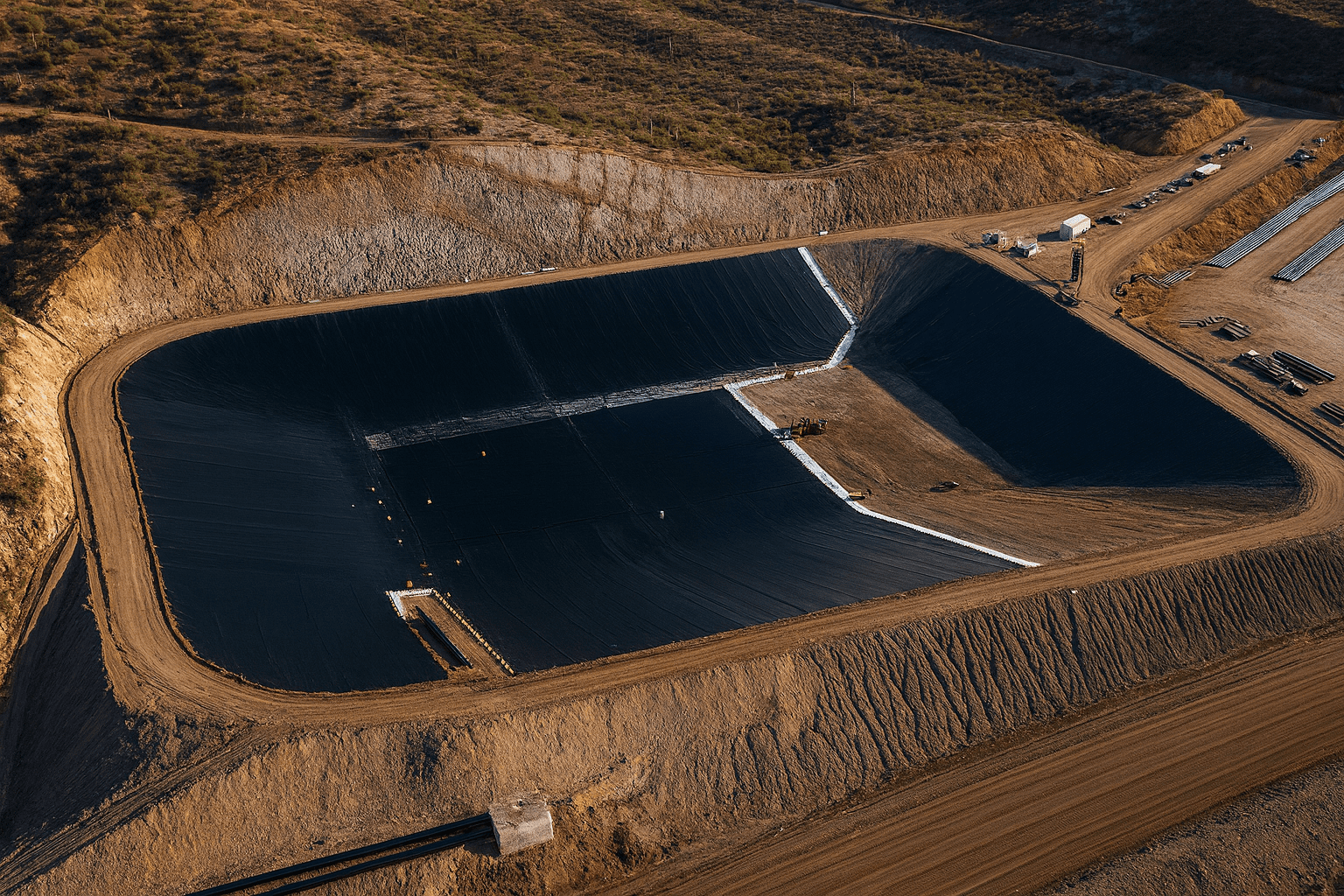
When most people look at an old heap-leach pad, they see the forgotten remnants of a mine long past its prime. But every now and then, history leaves behind a gift—material that was mined, crushed, and placed neatly on engineered pads, waiting for someone with the right lens to recognize what others once missed.
That’s exactly what’s happening at the Golden Butte leach pads.
Back in 1989 and 1990, Golden Butte was a gold-only operation. Antimony wasn’t a strategic mineral, it wasn’t priced to matter, and it certainly wasn’t something operators bothered to assay.
The mandate was simple: extract gold, and move on. Heap-leach cyanide circuits did just that—dissolving gold into solution while leaving everything else untouched. And because antimony doesn’t dissolve in those circuits, most of it remained locked in the very rock the miners had already mined and crushed.
Fast-forward to today, when antimony has become one of the most important critical minerals for defense, energy, and national supply chains. Suddenly, the story at Golden Butte looks very different.
NevGold’s Phase 1 sampling program shows that the material sitting on the surface of those historic pads—material that’s already been mined, already been crushed, and already been paid for—carries meaningful antimony and gold grades.
The old operators unknowingly stacked antimony-rich rock directly onto the pads because, at the time, they didn’t care about anything but gold. The result is an asset hiding in plain sight.
CEO Brandon Bonafacio says it is a “significant, near-surface antimony opportunity that we are rapidly advancing.”
In other words, Nevgold has a real near-term opportunity here.
Near Term Opportunity
Once you confirm the leach-pad material carries real antimony value, the obvious question becomes: What do you do with it?
And more importantly: How do you actually turn that rock into saleable antimony?
This is where the story gets interesting.
The Next Stage: Metallurgical Testing and Recovery Pathway
Before any company starts talking about trucks, plants, or sales agreements, there’s a critical step that every serious operator must take: metallurgical testing. This is where specialists take representative samples of that crushed material and run it through controlled lab processes to determine how antimony behaves, how easily it can be liberated, and which processing path gives the best recoveries.
In simple terms, metallurgy tells you two things:
- Can you get the antimony out?
- What’s the most efficient and cost-effective way to do it?
Once you know that, everything else falls into place.
Well, just last month on November 5, 2025, Nevgold announced up to 85% antimony recovery from positive Phase II metallurgical test work at the Limo Butte project.
But more importantly, in that same press release, Nevgold wrote:
“Acid Leaching is being reviewed as the preferred metallurgical process for antimony as there is currently no reliance on downstream processing at third-party smelters or refineries; the acid leaching scenario would produce antimony metal at site through a conventional leaching scenario.”
What NevGold is describing is a direct hydrometallurgical acid-leach process—a method that dissolves antimony from oxide material and recovers it on site as metal, without ever sending concentrate to a smelter.
And in today’s antimony market, that is a very big deal.
The Process: Direct Acid Leaching of Antimony Oxides
Antimony oxides behave very differently from classic stibnite (the sulfide mineral that must be floated and then smelted). Oxide antimony can, in many cases, be dissolved using a controlled acid leach—often employing hydrochloric or mixed acid systems. Once in solution, the antimony can then be selectively recovered through:
- electrowinning,
- cementation, or
- hydrolysis/precipitation into high-purity antimony metal or antimony trioxide.
This processing path is hydrometallurgical, meaning it uses liquid chemistry rather than high-temperature smelting.
No Third-Party Smelter Bottleneck
Almost all Western antimony projects are forced to ship a sulfide concentrate overseas—primarily to smelters in China—because very few smelters in North America or Europe can process antimony concentrates. That creates bottlenecks, geopolitical risk, and long timelines.
None of which is a help to the United States.
But acid-leaching of antimony sidesteps the smelting step entirely.
The result?
- No reliance on foreign smelters
- No concentrate shipping constraints
- Potentially higher payability
- A finished, high-purity antimony product created at site, or shipped nearby
This is exactly the type of domestic, vertically integrated processing pathway that the U.S. government and defense sector have been pushing for.
What It Means for NevGold’s Material
Because the Golden Butte leach pads host oxide antimony, they are potentially ideal candidates for this type of processing. The company wouldn’t need to worry about shipping a concentrate halfway around the world. Instead, the goal becomes: dissolve the antimony, recover it, and pour metal—or produce antimony trioxide—right at the project (or at a nearby producer with capabilities).
In other words, this isn’t just “recovering antimony.”
This is building a domestic antimony production circuit in Nevada, using a proven hydrometallurgical path that aligns perfectly with U.S. critical mineral priorities.
Remember: the Golden Butte leach pads aren’t raw rock sitting in the ground. They’re already mined. Already broken. Already sitting at surface. There’s no stripping, blasting, or crushing required. That removes millions in upfront costs and potentially years of development time.
If results continue to point in the right direction, this is one of the rare cases where “historic leach pads” could become a meaningful near-term source of a U.S. critical mineral—without waiting for a decade-long mine build.
In a world where most companies spend millions just to move dirt, strip waste, and start crushing rock, NevGold is beginning with a head start: a surface stockpile of pre-processed mineralized material that was never properly evaluated for the metals that matter today.
Sometimes the best discoveries aren’t found with a drill.
Sometimes they’re found by revisiting what everyone else overlooked.
And with antimony prices reaching as over $50,000/tonne in the US, and with some reports suggesting over $60,000/tonne, even a modest recovery rate could be meaningful.
Nevgold hasn’t yet revealed how much material they have sitting on those pads, but one could estimate based on historical production records.
Back-of-Napkin
According to the Western Mining History database:
Via the Westnern Mining History Database:
“In 2003, the existing gold mineral inventory was reported at 620,000 ounces of gold. 1989 reserves before mining began were reported at 4.23 million tons of ore grading 0.031 opt Au. Total recorded production from the mine between 1989 and 1991 was 43,519 ounces of Au, and 16,911 ounces of Ag , all from the south (Golden Butte) deposit. During the 1980’s the Alta Gold-Echo Bay joint venture reportedly mined approximately 130,000 ounces of gold from surface jasperiods via heap leach at the Golden Butte Mine. Another report states that 91,000 ounces of gold were produced from the Golden Butte Mine by Alta Gold from 1987-1989.”
So let’s say 100,000 ounces of gold were mined.
Theoretically, we could assume it was mined at 0.031 opt Au, which means there might be at least three million tonnes of rock sitting on those leach pads still.
Let’s say three million tonnes.
If the Golden Butte leach pads hold roughly 3 million tonnes of previously mined and crushed material, even a modest, conservative antimony grade of 0.2% Sb starts to reveal meaningful value.
At that grade, the pads would contain approximately 6,000 tonnes of antimony metal sitting in material that has already been mined, hauled, and processed once. Apply a conservative 80% recovery rate based on NevGold’s recent leach testing—the recoverable portion still totals roughly 4,800 tonnes of antimony.
At $50,000 per tonne of antimony, that equals a staggering US$240 million worth of antimony at surface – held by a junior mining company worth less than US$70 million.
In other words, even at a modest grade and recovery, the historic Golden Butte pads could represent a meaningful domestic antimony source, hiding in plain sight.
And that does not include any of the upside from the new high-grade antimony Bullet Zone discovery and the rest of the 67-square-kilometer project.
Why This Matters Right Now
Because the U.S. government has already invoked the Defense Production Act for critical minerals—including antimony.
The March 20, 2025 Executive Order explicitly demands:
“Priority projects that can be immediately approved.”
“Acceleration of permits.”
“A dedicated U.S. mineral investment fund.”
NevGold’s Limousine Butte project sits squarely in that policy crosshair:
- U.S. jurisdiction
- Brownfield environment
- Existing mined and crushed material with antimony potential
- Near-surface oxide mineralization
- Advancing toward a gold-antimony Mineral Resource Estimate in progress
The U.S. has already funded Perpetua Resources’ antimony project in Idaho with:
- US$75 million in DoD awards
- Over US$1.8 billion in indicative EXIM Bank financing
- US$255 million in strategic private-sector investment
The Pentagon has made it clear: they will support viable domestic antimony producers.
NevGold could soon be entering that category.
Conclusion
When you combine:
- A scarce, strategically essential mineral
- A geopolitical supply crunch
- A U.S. mandate to approve and fund domestic projects
- And a new high-grade Nevada discovery in a brownfield setting
You get the conditions we have always looked for at Equedia.
NevGold’s new Bullet Zone discovery puts the company directly into the conversation around domestic antimony development.
And with:
- Ongoing drilling and pending results
- A forthcoming gold-antimony MRE
- Brownfield advantages
- And a rapidly expanding mineralized footprint
…this story is only just beginning.
As always, timing is everything.
And for antimony, the clock has already started.
As the World Economic Forum recently put it:
“If governments and industry can get this right, antimony could become the model for building resilience before the next critical minerals supply chain choke point emerges.”
Stay tuned.
More catalysts are coming.
Nevgold Corp.
Canadian Trading Symbol: NAU
US Trading Symbol: NAUFF
German Trading Symbol: 5E50
Disclaimer:
Equedia.com and Equedia Network Corporation are not registered as investment advisers, broker-dealers or other securities professionals with any financial or securities regulatory authority. Remember, past performance is not indicative of future performance. This article also contains forward-looking statements that are subject to risks and uncertainties that could cause actual results to differ materially from the forward-looking statements made in this article. Just because many of the companies in our previous Equedia Reports have done well, doesn’t mean they all will. We are biased towards Nevgold (NAU) because the Company is an advertiser on www.equedia.com. We currently own shares of NAU. You can do the math. Our reputation is built upon the companies we feature. That is why we invest in every company we feature in our Equedia Special Report Editions. It’s your money to invest and we don’t share in your profits or your losses, so please take responsibility for doing your own due diligence and consult your own professional advisers before investing in NAU or trading in NAU securities. NAU and its management have no control over our editorial content and any opinions expressed in this article are our own. We’re not obligated to write a report on any of our advertisers and we’re not obligated to talk about them just because they advertise with us. For a complete disclosure of the compensation received by us from NAU, please review our Terms of Service and full disclaimer at www.equedia.com/terms-of-use/.
This newsletter (this “Newsletter”) is provided by Equedia Network Corporation (“Equedia”, “we” or “us”). Your access to and use of this Newsletter is subject to and governed by this disclaimer and Equedia’s Terms of Use, which is available at http://www.equedia.com/terms-of-use (the “Terms”). Please read this disclaimer and the Terms carefully. This Newsletter is not an offer to sell or a solicitation of an offer to buy any securities or commodities. To the extent that anything contained in this Newsletter may be deemed to be investment advice or a recommendation in connection with a particular company or security, such information is impersonal and is not tailored to the needs of any specific person. In addition to historical information, this Newsletter may contain forward-looking statements, including statements with respect to third parties regarding product plans, future growth, market opportunities, strategic initiatives, industry positioning, customer acquisition, the amount of recurring revenue and revenue growth. In addition, when used in this Newsletter, the words “will,” “expects,” “could,” “would,” “may,” “anticipates,” “intends,” “plans,” “believes,” “seeks,” “targets,” “estimates,” “looks for,” “looks to,” “continues” and similar expressions, as well as statements regarding a third party’s focus for the future, are generally intended to identify forward-looking statements. Each of the forward-looking statements we make in this Newsletter involves risks and uncertainties that may cause actual results to differ materially from these forward-looking statements. Factors that might cause or contribute to such differences include, but are not limited to, those disclosed by the parties referred to in this Newsletter in their public securities filings. You should carefully review the risks described therein. You should not place undue reliance on the forward looking statements in this Newsletter, which speak only as of the date such statement was published. Equedia undertakes no obligation to publicly release any revisions to the forward-looking statements or reflect events or circumstances after the date of their publication, except as required by law. As of the date of publication of this Newsletter, Equedia (on behalf of itself and any partner, director, officer or insider of Equedia) may have a financial or other interest in the party or parties featured in this Newsletter, within the meaning of National Instrument 31-103 – Registration Requirements, Exemptions, and Ongoing Registrant Obligations, published by the Canadian Securities Administrators. For full details of our compensation, please visit https://www.equedia.com/terms-of-use/.
As of the date of publication of this Newsletter, Equedia (on behalf of itself and any partner, director, officer or insider of Equedia) may have a financial or other interest in the party or parties featured in this Newsletter, within the meaning of National Instrument 31-103 – Registration Requirements, Exemptions, and Ongoing Registrant Obligations, published by the Canadian Securities Administrators. Equedia and its directors own shares of Nevgold (NAU) at the time of this writing. In May 2025, Equedia was paid C$350,000 for a six month advertising contract for NAU, which has expired. In November, Equedia was paid $150,000 for two months of services. These services were paid for by NAU. We have also previously been compensated by NAU for advertising contracts, which have expired.